Holiday Light Installation Cost in Raleigh NC: Complete 2025–2026 Guide

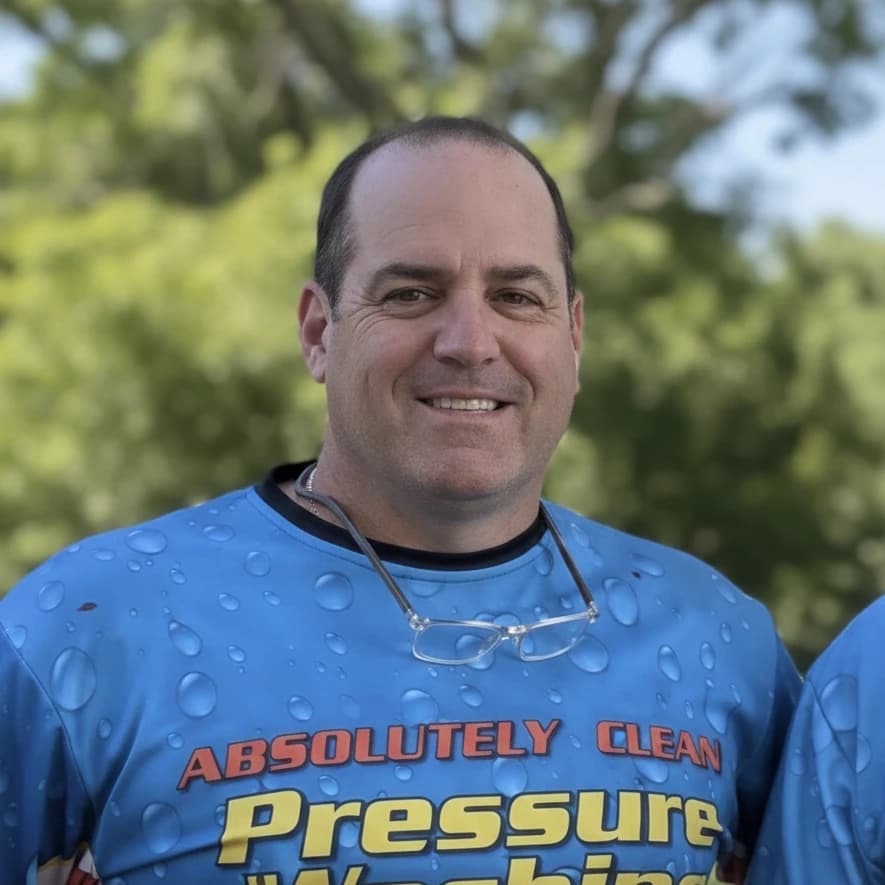
Stewart Esposito
What Does Professional Holiday Light Installation Cost in Raleigh?
Professional holiday light installation in the Raleigh-Durham Triangle costs $2.60 to $7.35 per linear foot, with most homeowners paying $256 to $735 for standard installations. The Triangle offers competitive pricing — approximately 5% below national averages — due to lower regional labor costs while maintaining access to 13+ specialized seasonal lighting companies.
Installation labor alone runs $2.10 to $5.25 per foot, while materials (professional-grade LED lights, clips, extension cords) add $0.50 to $2.10 per foot. Combined, most packages include lights, installation, season-long maintenance, takedown, and storage. For a typical two-story home with 180 linear feet of roofline, expect to pay $468 to $1,323 depending on service level and complexity.
| Home Type | Linear Feet | Price Range | What's Included |
|---|---|---|---|
| Small / ranch (1-story) | 70–120 ft | $200–$600 | Roofline only, basic design |
| Average (2-story) | 140–220 ft | $500–$1,200 | Roofline, windows, entryway |
| Large (3-story) | 200–300 ft | $1,200–$2,500 | Full facade, multiple rooflines |
| Estate / luxury | 300+ ft | $2,500–$6,500+ | Complete property, custom design |
The first year typically costs more because you are purchasing the lights (in lease-to-own models) or paying for initial design work. Returning customers often pay 40 to 60% less in subsequent years as they pay primarily for installation labor.
See our complete service details on the holiday lighting services page.
What's Included in a Full-Service Package
Professional full-service packages eliminate all the hassle. Here is what a typical package includes from design to removal.
Design Consultation
Most providers use satellite imagery to plan layouts without requiring a home visit. Technicians custom-cut LED strings to match exact roofline measurements — no awkward gaps or dangling excess wire. You approve the design before any work begins.
Professional-Grade Materials
Commercial-grade LED lights rated for 50,000 to 75,000 hours (6 to 7+ seasons), professional mounting clips that will not damage roofing or gutters, custom-length concealed extension cords, and outdoor timers. Big-box store lights typically last only 2 to 3 seasons by comparison.
Season-Long Maintenance
If bulbs burn out or strings fall during the season, technicians return within 24 to 48 hours at no additional charge. This alone can justify professional service for homeowners with two-story homes or difficult access — you never have to get on a ladder to fix a dead section.
January Removal and Storage
Most companies schedule takedown in the first two weeks of January and store lights off-site in climate-controlled facilities until the following season. Storage is typically included at no extra charge.
Lease vs. Purchase Model
The lease model runs $260 to $630 annually — the company owns the equipment and handles everything. The purchase model costs 20 to 40% more in year one because you buy the lights outright, but subsequent years drop to installation-only pricing. The break-even point between models typically occurs at 3 to 4 years of service. Homeowners expecting to use professional installation for 5+ years generally save with purchase; shorter timeframes favor leasing.
Tree, Shrub, and Add-On Pricing
Beyond basic roofline lighting, every added element carries specific pricing. Trees represent the largest add-on expense, with costs scaling dramatically with height due to equipment and crew requirements.
| Tree Height | Price Range | Notes |
|---|---|---|
| Up to 6 ft | $75–$200 | Ground-accessible, ~8 strands |
| 10–12 ft | $100–$150 | Ladder-accessible |
| 15–18 ft | $150–$330 | 12–15 strands required |
| 20–25 ft | $300–$800 | May require lift equipment |
| 28–30 ft | $550–$1,500 | Bucket truck required |
| 30+ ft (commercial) | $1,200–$2,460+ | Full lift crew, extensive material |
Projects requiring bucket truck or lift equipment (common for 25+ foot trees or 3-story rooflines) add $400 to $700 or more for equipment rental. This is typically the largest single factor that pushes installations into higher price ranges.
| Element | Price Range |
|---|---|
| Shrub / bush wrapping (per bush) | $10.50–$33 |
| 48-inch LED wreath (installed) | $250 |
| 60-inch LED wreath (installed) | $325 |
| Garland (per 9 ft section) | $5–$8 + installation |
| Window outlines | $200–$300 |
| Driveway / pathway lighting | $60–$180 |
| Balcony lighting (8 ft) | $50–$75 |
| Icicle lights (additional to roofline) | $2–$3 per linear foot extra |
| Light timers | $12–$50 + $60–$100 installation |
Design Complexity Premiums
Custom color patterns, multi-zone timing, and themed displays add 20 to 30% above standard pricing. Permanent architectural features with complex angles can reach $33 to $38 per foot versus $20 to $25 for straightforward rooflines. Most homeowners get excellent results with standard packages — custom designs are best reserved for estate-level properties or commercial applications.
Commercial and HOA Pricing
Storefronts and small commercial properties typically pay $750 to $1,500 for standard displays. HOA common areas benefit from group discounts — most installers offer 10 to 15% off for 3+ homes in the same community and 15 to 25% off for 6+ homes. Churches and religious facilities start at $750 for multi-story installations.
Get Your Free Estimate
Find out exactly what your project will cost. No obligation, no pressure.
Get Free Quote →LED vs. Incandescent: The Numbers That Matter
Professional installers now use LED lights almost exclusively. The upfront cost premium delivers rapid payback through energy savings and vastly extended lifespan. Here is the comparison for a typical 300-foot C9 roofline display running 6 hours daily for 6 weeks.
| Metric | LED | Incandescent | Difference |
|---|---|---|---|
| Watts per bulb | 0.8W | 7W | 88.6% reduction |
| Total display watts | 240W | 2,100W | — |
| kWh per 6-week season | 60.5 kWh | 529.2 kWh | — |
| Electricity cost per season | $9.07 | $79.38 | $70.31 savings |
| Rated lifespan | 25,000–100,000 hours | 1,500–3,000 hours | — |
| Expected seasons | 6–7+ seasons | 1–2 seasons | — |
| 5-year total cost (electricity + replacement) | ~$1,050 | ~$1,447 | $397 savings |
Running a professional-grade LED display costs remarkably little. For a typical roofline display, total electricity runs approximately $9 for the entire season — less than $2 per week. Even elaborate displays with multiple trees, bushes, and accent lighting rarely exceed $25 to $40 for the full season with LED technology.
C7 vs. C9 Bulbs
C9 bulbs (1⅛-inch diameter, 80 to 120 lumens) are the professional standard for rooflines — bright enough to be visible from the street. C7 bulbs (⅞-inch diameter, 40 to 80 lumens) work better for trees, windows, and accent applications. Both come in warm white (2700K), cool white (5000K), and traditional colors, with LED-exclusive RGB color-changing and programmable variants available.
Smart Controllers
Basic outdoor timers run $12 to $50. Smart plugs enabling app control cost $15 to $30 and integrate with existing home automation systems. Professional-grade smart systems with zone control, dimming, and color-changing capability range $200 to $500 installed.
DIY vs. Professional: The Real Cost Comparison
The materials to DIY-install holiday lights on a typical home run $112 to $290 — seemingly far below professional rates. A closer look reveals the full picture.
| Item | Cost |
|---|---|
| LED C9 string lights (25 ft each, 4–6 needed) | $52–$120 |
| Light clips (2–3 packs) | $15–$45 |
| Outdoor extension cords (14–16 gauge) | $30–$80 |
| Timer / smart plug | $10–$30 |
| Replacement bulbs | $5–$15 |
| Materials subtotal | $112–$290 |
| Extension ladder (if needed) | $150–$400 |
| First-year total with ladder | $262–$690 |
Time Investment
Professionals complete roofline installations in 1 to 2 hours with practiced efficiency and multiple crew members. First-time DIY homeowners report 4 to 6 hours for single-story homes and 8 to 16 hours (a full weekend) for complex displays. That is before counting design planning, supply runs, and troubleshooting failed bulbs.
Safety Data
The Consumer Product Safety Commission reports 14,900 emergency room visits during the 2023 holiday season for decorating-related injuries. Over two decades, the CPSC estimates 312,000+ ER trips from holiday decoration accidents. CDC analysis found 43% of holiday decorating injuries involve falls, with ladder falls accounting for the majority. Among those who fell from ladders, 47% required hospitalization.
The peak injury day is the Sunday after Thanksgiving, averaging approximately 660 injuries as homeowners rush to install displays. Middle-aged adults (40 to 60) represent the highest-risk group, suffering 50% more injuries than expected based on population patterns.
Professional installers mitigate these risks through training, fall protection equipment, commercial-grade ladders, and — for taller work — bucket trucks that eliminate ladder use entirely. Workers' compensation insurance means injuries do not become the homeowner's liability.
When to Book and How to Save
Understanding the Raleigh-Durham seasonal booking cycle helps you secure preferred dates and potentially better pricing.
- August–September:Request estimates now. Booking this early often unlocks 10 to 15% early-bird discounts.
- October:Installations begin. First-come, first-served scheduling means October bookings get priority dates. Last reliable window for early-bird pricing.
- November 1–15:Peak booking period. The single most requested window — the week before Thanksgiving — fills fastest.
- Late Nov–Mid Dec:Rush period. Last-minute availability may exist but at full price with limited date flexibility.
- Early January:Removal window. Most companies complete takedowns by January 15.
Ways to Save
- →Book early (August to October) for 10 to 15% off
- →Return customer pricing: 40 to 60% less after year one
- →Bundle with other services (house washing, gutter cleaning) for additional discounts
- →Organize neighborhood groups: 10 to 15% off for 3+ homes, 15 to 25% off for 6+ homes
- →Choose the purchase model if you plan to use professional installation for 4+ years
Pro tip: schedule your gutter cleaning and house washing for late October before holiday light installation. Clean gutters make installation easier and safer, and a clean house makes your lights look better.
Get Your Free Estimate
Find out exactly what your project will cost. No obligation, no pressure.
Get Free Quote →How Raleigh-Durham Pricing Compares to Other Markets
Triangle-area pricing reflects favorable labor economics while matching national service quality standards. Bureau of Labor Statistics data shows Triangle construction wages running approximately 5% below national averages, explaining our competitive positioning.
| Market | Average Installation | Per Linear Foot |
|---|---|---|
| Raleigh-Durham | $466 ($256–$735) | $2.60–$7.35 |
| Charlotte, NC | $200–$1,200 | $2.50–$6.00 |
| National average | $432–$443 | $2.50–$7.00 |
| New York City | $699 | $4.10–$11.50 |
| Miami | $650–$750 | Premium rates |
| Los Angeles | $500–$1,000 | Higher labor |
| Midwest / rural | $250–$600 | Lower overhead |
Raleigh and Charlotte offer nearly identical pricing, both falling in the lower-to-middle range nationally. Coastal markets (California, Northeast, Florida) typically run 20 to 40% higher due to elevated labor rates and cost of living. The Southeast generally offers the nation's most competitive professional installation pricing without sacrificing quality — most Triangle installers use identical commercial-grade equipment as their Northeast counterparts.
The professional holiday lighting market has grown significantly, with the global decorations market reaching approximately $8.1 billion in 2023 and projected to grow to $10.87 billion by 2031. Consumer attitudes have shifted measurably — 78% of homeowners now view professional holiday lighting as essential rather than luxury, and average installation values increased 23% year-over-year from 2024 to 2025.
Permanent Lighting Systems: A Long-Term Alternative
For homeowners who plan to install professional holiday lights every year, permanent architectural lighting systems deserve consideration. These year-round LED track systems are controlled via smartphone apps and eliminate annual installation and takedown entirely.
| Installation Scope | Price Range |
|---|---|
| Per linear foot | $18–$35 |
| Front of home (smaller) | $2,500–$3,500 |
| Front of home (mid-size) | $3,400–$5,200 |
| Front of home (larger) | $4,400–$6,800 |
| All sides (smaller) | $5,400–$9,000 |
| All sides (mid-size) | $6,500–$12,000 |
| All sides (larger) | $7,500–$14,500 |
Break-Even Analysis
The break-even point versus annual seasonal installation typically occurs at 3 to 5 years. If you spend $800 to $1,200 annually on seasonal professional installation, a $4,000 to $6,000 permanent system pays for itself in roughly 4 to 5 holiday seasons — and provides year-round functionality for the remaining 15+ years of its lifespan.
Year-Round Benefits
- →16+ million colors via smartphone app
- →Holiday themes, game day colors, everyday accent lighting, and security applications
- →Lifetime product warranties with 50,000+ hour lifespans (20+ years)
- →Zero annual installation, takedown, or storage hassle
Permanent systems make the most sense for homeowners committed to staying in their home for 5+ years who want both holiday and everyday accent lighting. For shorter timeframes or homeowners who enjoy changing designs each year, seasonal professional installation remains the better value.
How to Choose the Right Holiday Light Installer
Not all holiday light companies are equal. Here is what to verify before hiring any installer.
Insurance Is Non-Negotiable
Legitimate professional installers carry general liability insurance ($1 to $2 million per occurrence), workers' compensation, and often professional liability coverage. Request the certificate of insurance before work begins — reputable companies provide this immediately. Without workers' comp, an injured worker could file claims against your homeowner's insurance.
Red Flags
- →Cannot produce insurance certificates
- →Operates primarily as a different business (lawn care, handyman) with lighting as a sideline
- →No branded vehicles or professional equipment
- →No maintenance guarantee during the season
- →Quotes significantly below market rates (may indicate cutting corners on materials or insurance)
Our Holiday Lighting Service
At Absolutely Clean Power Washing, our holiday lighting service includes full-service design, professional-grade LED lights, installation, season-long maintenance with 24 to 48 hour response, January removal, and climate-controlled storage. We are fully insured with $2 million in general liability coverage, carry workers' compensation for all employees, and have been serving the Triangle since 2012.
We also offer bundle pricing when you combine holiday lights with house washing or gutter cleaning — a smart combination since clean gutters make installation easier and a clean house makes your lights look better. Owner Stewart Esposito personally oversees every project.
Get Your Free Estimate
Find out exactly what your project will cost. No obligation, no pressure.
Get Free Quote →
Stewart Esposito
Owner & Lead Technician
PWNA Certified TechnicianStewart has been running Absolutely Clean Power Washing since 2012, completing over 3,000 projects across the Raleigh-Durham Triangle. PWNA certified with expertise in soft washing, pressure washing, and wood restoration.
Meet our team →Get Your Free Estimate
Find out exactly what your project will cost. No obligation, no pressure.
Get Free Quote →Related Articles
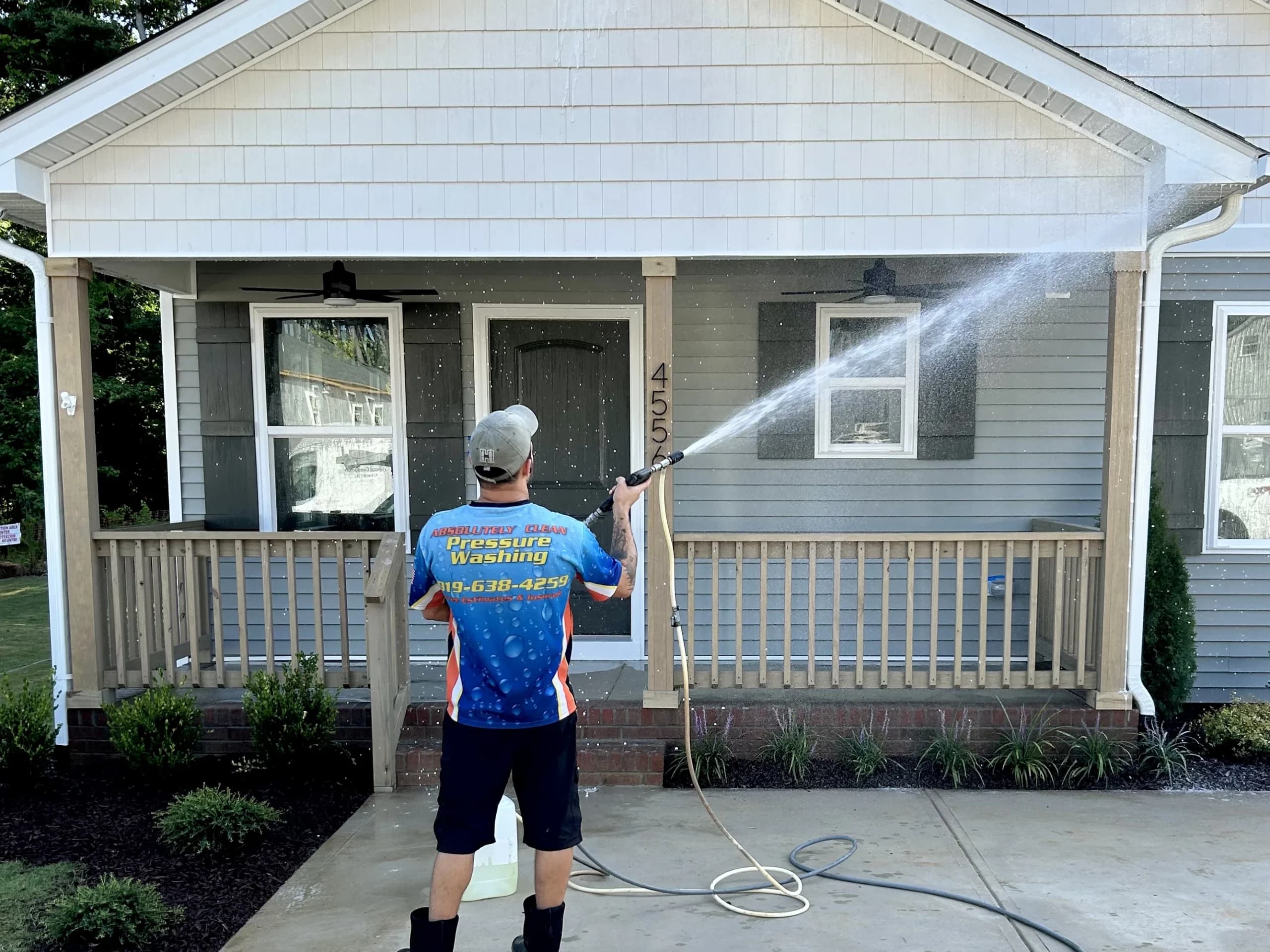
Pressure Washing Cost in Raleigh NC: Complete 2026 Pricing Guide
Everything you need to know about pressure washing prices in the Raleigh-Durham Triangle. Detailed cost breakdowns for house washing, driveways, roofs, decks, and more — with honest pricing from a local PWNA-certified company with 3,000+ completed projects.

How Often Should You Pressure Wash Your House in North Carolina?
The Triangle's 70%+ humidity and 10-month pollen season mean NC homes need cleaning more often than national averages. Get surface-by-surface schedules, monthly humidity data, seasonal timing windows, manufacturer warranty requirements, and a financial analysis showing $1,100/year prevents $40,000–$95,000 in premature replacements.