How Often Should You Pressure Wash Your House in North Carolina?

Stewart Esposito
How Often Should You Clean Each Surface?
The answer depends on three factors: what material the surface is made of, how much sun and shade it gets, and how close you are to trees. Here is a surface-by-surface breakdown based on NC Triangle climate data and manufacturer recommendations.
House Exterior and Siding
Most Triangle homes need a full house wash once per year. Homes with heavy tree coverage, north-facing walls, or proximity to highways may need cleaning every 6 months. Sunny, open-lot properties can often stretch to every 18 to 24 months.
| Surface Type | Standard Frequency | High-Exposure (Shaded/Wooded) | Low-Exposure (Sunny/Open) |
|---|---|---|---|
| Vinyl siding | Annually | Every 6 months | Every 2 years |
| James Hardie fiber cement | Every 6–12 months | Every 6 months | Annually |
| Brick siding | Annually | Annually | Every 2–3 years |
| Wood / cedar siding | Annually | Annually | Every 2 years |
James Hardie fiber cement requires the most attention — the manufacturer recommends cleaning every 6 to 12 months and explicitly warns against high-pressure washing. Their 30-year warranty can be voided by pressure washing damage. Vinyl siding is more forgiving, but water intrusion behind panel seams is the primary risk when cleaning at high pressure. Wood and cedar siding develop mold rapidly in NC's humidity and need annual cleaning to prevent rot. See our house washing services page for our approach.
Roofing Surfaces
Asphalt shingle roofs should be inspected annually and cleaned as needed — typically every 1 to 3 years depending on tree coverage and visible algae growth. Metal roofs can go 18 to 24 months between cleanings. North-facing roof planes experience 2 to 3 times more organic growth than south-facing sections and should be monitored closely for Gloeocapsa magma (black streaks). Never pressure wash any roof — soft wash methods are the only safe option per ARMA, GAF, and Owens Corning.
Concrete and Hardscape
| Surface | Standard Frequency | High-Traffic / Shaded | Low-Traffic / Sunny |
|---|---|---|---|
| Driveways | Every 6–12 months | Every 3–6 months | Annually |
| Sidewalks / patios | Annually | Every 6 months | Every 18 months |
| Pavers | Every 1–2 years | Annually | Every 3–4 years |
Driveways take the most abuse from tire marks, oil stains, and NC red clay splash-back during rainstorms. Shaded driveways develop algae that creates genuine safety hazards — algae-covered concrete is more slippery than ice when wet. Our Quad Kleen process addresses all of these contaminants.
Decking Surfaces
| Deck Material | Cleaning Frequency | Maximum PSI | Key Consideration |
|---|---|---|---|
| Pressure-treated wood | Annually | 1,000–1,200 PSI | Seal after cleaning for maximum protection |
| Cedar / softwood | Annually | 500–600 PSI | Very pressure-sensitive — oxygen bleach only |
| Composite (Trex / TimberTech) | Twice per year | 1,500–3,100 PSI (varies by brand) | Early-generation products cannot be pressure washed |
A detail most homeowners miss: composite deck manufacturers like Trex and TimberTech require semi-annual cleaning to maintain warranty coverage. Both also require spill cleanup within 7 days or the stain warranty is voided. Early-generation composite products cannot be pressure washed at all — check your specific brand and model before choosing a method. Learn more on our deck and patio services page.
Gutters and Fencing
Gutters need interior debris cleaning twice per year — late spring (May to June) after pollen and late fall (November) after leaves drop. Homes with heavy tree coverage need 4 to 6 cleanings annually. Exterior tiger stripes require specialized cleaners and are typically addressed during house washing. Wood and vinyl fences should be cleaned annually.
NC Climate Data: Why Triangle Homes Need More Frequent Cleaning
The Triangle's humid subtropical climate creates a perfect storm for exterior deterioration. National cleaning guidelines do not account for our specific humidity, pollen, and rainfall combination — Triangle homeowners need to clean more frequently than national averages suggest.
Year-Round Humidity Creates Constant Mold Conditions
The mold growth threshold begins at 55 to 60% relative humidity with temperatures between 60 and 80°F. The Triangle's annual average of 70 to 71% humidity exceeds this threshold year-round. During 5 to 6 months of the year (May through October), humidity is significantly above the danger zone. Under these conditions, visible mold can appear on exterior surfaces within 2 to 4 weeks of initial colonization.
| Month | Average Humidity | Mold Growth Risk |
|---|---|---|
| January | 72% | High |
| February | 62% | Moderate |
| March | 63% | Moderate |
| April | 61% | Lowest |
| May | 68% | Moderate–High |
| June | 72% | High |
| July | 76% | High |
| August | 78% | Highest |
| September | 75% | High |
| October | 72% | High |
| November | 68% | Moderate–High |
| December | 72% | High |
We receive 46 inches of annual rainfall versus the 38-inch US average. Combined with temperatures in the 70 to 100°F range through summer and fall, mold and algae can reappear on exterior surfaces within 24 to 48 hours after rain events. Southeast homes need exterior cleaning approximately twice as frequently as homes in dry climates.
Pollen Season Spans Nearly 10 Months
The Triangle experiences one of the longest pollen seasons in the country, running from late February through early December. The infamous yellow pine pollen peaks during a 3-week window from late March through early April, with counts sometimes exceeding 3,500 grains per cubic meter. Climate Central research shows NC's allergy season is lasting roughly one month longer than it did in the 1970s.
| Pollen Type | Active Period | Peak Months |
|---|---|---|
| Tree pollen | February–June | March–April |
| Grass pollen | April–September | May–June |
| Weed pollen | August–December | September |
Pine pollen has microscopic spikes that adhere to painted surfaces, decks, and siding. Cleaning during peak pollen season (late March to early April) wastes money — surfaces recoat within 24 to 48 hours. The optimal strategy is waiting until mid-May when accumulation stops.
Red Clay and Iron Oxide Staining
North Carolina's official state soil — the Cecil series — covers 1.6 million acres across the Piedmont region. This iron-rich red clay transfers to homes through rain splash-back (affecting the lower 2 to 3 feet of siding), foot and vehicle tracking, erosion runoff, and wind-carried dust. The iron oxide (essentially rust) bonds to concrete and siding, and standard pressure washing alone cannot break this bond. Professional oxalic acid treatments are needed to chemically convert the iron oxide for removal.
Tree Coverage Doubles Cleaning Frequency
| Property Type | Recommended Frequency | Primary Concerns |
|---|---|---|
| Heavy tree cover | Every 6–12 months | Shade, debris, moisture retention |
| Moderate coverage | Annually | Standard for NC climate |
| Open lot (minimal trees) | Every 12–18 months | More sunlight, faster drying |
| Lakeside / waterfront | Every 6–12 months | Higher ambient humidity |
North-facing surfaces experience 2 to 3 times more organic growth than south-facing exposures due to reduced UV exposure and slower evaporation. Homes surrounded by trees may require spot cleaning between annual washes on north-facing walls. Lakeside and waterfront properties face higher ambient humidity that accelerates growth beyond even shaded inland properties.
Get Your Free Estimate
Find out exactly what your project will cost. No obligation, no pressure.
Get Free Quote →Visual Warning Signs That Mean Clean Now
Beyond scheduled maintenance, certain visual indicators signal that immediate cleaning is needed — not just at your next scheduled appointment.
Green Streaks on Siding
Green streaks indicate algae growth thriving in moist, shaded areas with poor air circulation. These spread quickly via airborne spores after wet weather and can eat through paint and wood if untreated. Most common on north-facing walls, green streaks represent moderate-to-high urgency — they will only worsen without treatment.
Black Streaks on Roofs
Gloeocapsa magma — the cyanobacterium causing those dark streaks across Triangle roofs — is the most concerning visual indicator. It feeds on limestone filler in asphalt shingles, creates a dark UV-protective coating, and spreads from roof to roof via airborne spores. Once visible, streaks worsen annually without treatment. The Southeast US is the highest-affected region in the country. Insurance companies may cancel policies, and HOAs commonly require remediation.
Slippery Walkways and Driveways
Slippery surfaces represent both a cleaning need and a liability hazard. Algae-covered concrete becomes more slippery than ice when wet, contributing to over 8 million fall-related ER visits annually. If visible green or black film covers more than 25% of a walkway surface, or you have noticed near-slips, clean immediately.
Tiger Stripes on Gutters
Vertical black streaks on gutter exteriors result from electrostatic bonding between pollutants and oxidized aluminum. Standard house washing chemicals will not remove them — specialized products are required. If left too long, they permanently oxidize the gutter surface.
Mold Smell Near Exterior Walls
A mold smell near exterior walls is the most serious warning sign. It suggests hidden mold behind siding from moisture infiltration. Per EPA guidelines: "A moldy odor suggests mold is growing and should be investigated." This requires immediate professional assessment — not just surface cleaning.
The Best Time to Clean: A Seasonal Calendar
Strategic timing around NC's pollen season and temperature fluctuations delivers the best results and value. Here is when to schedule each cleaning task for maximum effectiveness.
| Task | Best Primary Window | Best Secondary Window | Avoid |
|---|---|---|---|
| House washing | Late April–May | September–October | Late March–early April (pollen) |
| Roof cleaning | Late April–May | October–November | Winter and peak pollen |
| Driveway cleaning | Late April–May | October–November | Below 40°F |
| Deck cleaning | Late April–May | September–October | Before staining: need 48–72 hrs dry |
| Gutter cleaning | May–June | November–December | N/A — required seasonally |
Temperature Thresholds Matter
Optimal results occur between 50 and 75°F. Pressure washing becomes risky below 40°F because water trapped in cracks can freeze and expand, and cleaning chemicals perform poorly in cold conditions. NC's mild winters allow cleaning on warmer days (typically 11am to 3pm), but overnight freezes following daytime cleaning can cause damage to porous surfaces.
Pollen Season Strategy
Before pollen season (February to early March): clean windows, clear gutters of winter debris, and store or cover outdoor furniture. After pollen season (mid-May onward): schedule house siding, deck and patio, roof, and driveway cleaning. This timing removes the yellow coating while preventing summer mold and mildew growth.
Holiday Preparation Timeline
For Thanksgiving: schedule professional house washing and gutter cleaning 4 to 6 weeks before (early to mid-October), clean driveways and walkways 2 to 3 weeks before, and perform final touch-ups one week prior. For Christmas: complete professional exterior cleaning 6 to 8 weeks before (late October) while temperatures still allow effective cleaning, ensuring surfaces are fully dry before decorating and gutters are clean before hanging holiday lights.
Financial Analysis: Maintenance Delivers 4–10x Return on Investment
The economic case for regular exterior maintenance is clear when comparing annual cleaning costs against premature replacement expenses. Approximately $1,100 per year in maintenance prevents $40,000 to $95,000 in premature replacements over a 10 to 15 year period.
| Category | Annual Maintenance Cost | Replacement Cost (Neglect) | Lifespan Extension |
|---|---|---|---|
| House washing | $250–$600 (avg $320) | $6,000–$36,000 (siding) | +10–20 years |
| Roof cleaning | $250–$600 (avg $460) | $5,800–$30,000 (shingles) | +10 years |
| Driveway cleaning | $100–$300 (avg $175) | $2,000–$10,000 (replacement) | +8–15 years |
| Deck cleaning | $100–$250 (avg $150) | $4,800–$32,000 (replacement) | +5–10 years |
| Total annual | $700–$1,750 | $47,000–$95,000 | — |
The lifespan extension data is even more compelling. Regular cleaning does not just prevent cosmetic damage — it prevents the biological and chemical deterioration that leads to structural failure.
| Material | WITHOUT Maintenance | WITH Regular Maintenance | Extension |
|---|---|---|---|
| Vinyl siding | 20 years | 30–40+ years | +50–100% |
| Fiber cement siding | 30–40 years | 50–70 years | +50–75% |
| Wood siding | 10–15 years | 20–40 years | +100–166% |
| Asphalt shingles | 15–20 years | 25–30 years | +40–50% |
| Pressure-treated deck | 8–10 years | 15–20 years | +87–100% |
| Composite deck | 20–25 years | 25–50 years | +25–100% |
| Asphalt driveway | 12–15 years | 20–30 years | +67–100% |
Property Value and Curb Appeal
National Association of Realtors data reveals that 97% of realtors believe curb appeal is important for selling a home, and 94% recommend sellers improve it before listing. Homes with strong curb appeal sell for up to 7% more than comparable neglected properties. Curb appeal improvements generate approximately 238% ROI. More than half of homeowners believe exterior improvements increase home value by at least $20,000.
Insurance Implications
Homeowners insurance covers sudden and accidental damage but excludes damage from neglect or gradual deterioration. Mold claims resulting from ignored roof leaks or gradual water infiltration are routinely denied. Many policies sub-limit mold coverage to $5,000 to $15,000, while remediation can cost $9 to $23 per square foot. Regular maintenance documentation strengthens claim positions and helps avoid policy cancellation — neglected properties face both denied claims and potential non-renewal.
See our complete pressure washing pricing guide for detailed service costs and discount options.
Get Your Free Estimate
Find out exactly what your project will cost. No obligation, no pressure.
Get Free Quote →Manufacturer Requirements That Affect Your Warranty
Major manufacturers impose specific maintenance requirements that directly affect warranty coverage. Violating these requirements can void protection on exterior investments worth tens of thousands of dollars.
| Manufacturer | Cleaning Frequency | Max Pressure | Key Warranty Voiders |
|---|---|---|---|
| James Hardie | Every 6–12 months | 1,500 PSI (not recommended) | Pressure washing damage, harsh chemicals |
| GAF Shingles | As needed | NO pressure washing | Pressure washing, foot traffic damage |
| Owens Corning | As needed | NO pressure washing | Pressure washing, inadequate ventilation |
| Trex (current gen) | Semi-annual | 3,100 PSI max | Exceeding PSI limit, sanding, painting |
| Trex (early gen) | Semi-annual | NONE allowed | ANY pressure washing voids warranty |
| TimberTech | Annual (2x near coast) | 1,500 PSI rinse only | Wrong brush type, biocides, dried cleaner |
James Hardie Fiber Cement
The 30-year warranty requires cleaning every 6 to 12 months with soft-bristle brushes and mild soap. Metal brushes, acid washing, or high-pressure blasting voids coverage. Approved cleaners include Dawn, Ivory, or Joy dish soap for oil and grease, and Jomax or Mold Armor for mildew.
GAF and Owens Corning Shingles
Both manufacturers prohibit pressure washing entirely and recommend the industry-standard 50/50 bleach solution applied with low-pressure spray. GAF's StainGuard Plus products include 25 to 30 year algae protection warranties specifically for blue-green algae. If you allow a contractor to pressure wash your asphalt roof, any future warranty claim will likely be denied.
Trex and TimberTech Composite Decking
Trex mandates semi-annual cleaning and requires spill cleanup within 7 days to maintain stain warranty coverage. Current Transcend, Enhance, and Select lines allow pressure washing up to 3,100 PSI with fan tips, but early-generation products (Accents, Origins, Contours, Profiles) cannot be pressure washed at all. TimberTech requires annual cleaning (twice yearly within 1 mile of the coast) and specifies different brush types for different product lines — using the wrong brush type voids the warranty.
Documentation for Warranty Claims
Homeowners should maintain proof of purchase, installation documentation, product information (model numbers, lot numbers), and maintenance records including cleaning dates, products used, service receipts, and before and after photos. Retain receipts for the life of the warranty plus 2 years, and store critical documents both physically and digitally.
For more on safe cleaning methods for each surface, see our guide: Soft Wash vs. Pressure Wash: Which Method Is Right for Your Home?
HOA Requirements in Triangle Communities
Most planned communities throughout Raleigh, Cary, Apex, Durham, and Chapel Hill mandate exterior cleaning as part of their covenants. Proactive maintenance avoids violation notices and potential fines.
Common HOA Exterior Standards
Triangle HOAs typically require removal of dirt, mildew, and algae from siding; clean driveways and sidewalks (oil stains, dirt, tire marks); fence and deck maintenance; and roof appearance standards. Common violation language includes: "Sidewalks and driveways that are black or covered in mildew/mold/grime" and "Algae, mildew, mold or other grime on exterior of home, fencing, or roof."
NC Enforcement Framework
Under the NC Planned Community Act (N.C.G.S. Chapter 47F), HOAs must provide written notice of violations, give homeowners an opportunity to be heard and present evidence, and provide written notice of decisions. After a decision, owners have 5 days before daily fines can begin.
Penalties Escalate Quickly
- →Informal warning, then formal written violation notice with deadline
- →7 to 30 days to cure the violation
- →Fines up to $100 per violation per day after the 5-day cure period
- →Lien filing after 30 days delinquent; foreclosure initiation after 90 days
NC law does require judicial foreclosure (not nonjudicial) if the lien consists solely of fines — providing extra protection. But the escalation path makes it far simpler and cheaper to maintain a regular cleaning schedule than to deal with violations after the fact.
Our Recommended Annual Maintenance Plan
Based on 12 years and over 3,000 projects across the Triangle, here is the annual maintenance schedule we recommend for most NC homeowners:
- Late May:Full house wash (after pine pollen subsides), deck and patio cleaning, and driveway cleaning. This is the single most valuable cleaning session of the year.
- May–June:First gutter cleaning of the year — clear pollen and spring debris.
- September–October:Second house wash if in a high-exposure area (heavy shade, north-facing, heavy tree coverage). Roof inspection and cleaning if black streaks are visible.
- Late October:Holiday preparation cleaning — house, driveway, walkways. Complete before temperatures drop below 50°F regularly.
- November:Final gutter cleaning after leaf drop. Essential before winter rains.
For homeowners who want to simplify scheduling, we offer annual maintenance contracts at 20% off regular pricing. You get priority scheduling during peak season, and we handle the timing based on weather and pollen conditions — you do not have to think about it.
We are PWNA-certified, fully insured with $2 million in general liability coverage, and have completed over 3,000 projects across the Raleigh-Durham Triangle since 2012. Owner Stewart Esposito personally oversees every job. We follow manufacturer specifications for every surface on your property, use soft washing where required and pressure washing only on appropriate surfaces, and guarantee your satisfaction.
Get Your Free Estimate
Find out exactly what your project will cost. No obligation, no pressure.
Get Free Quote →Related Services

Stewart Esposito
Owner & Lead Technician
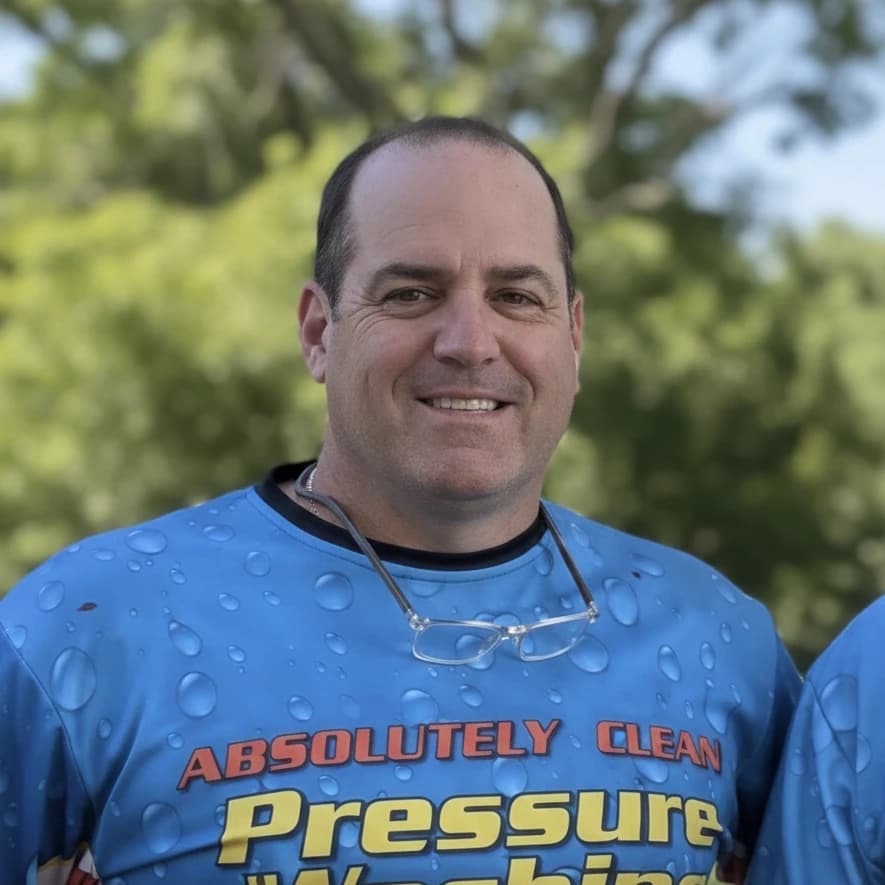
PWNA Certified TechnicianStewart has been running Absolutely Clean Power Washing since 2012, completing over 3,000 projects across the Raleigh-Durham Triangle. PWNA certified with expertise in soft washing, pressure washing, and wood restoration.
Meet our team →Get Your Free Estimate
Find out exactly what your project will cost. No obligation, no pressure.
Get Free Quote →Related Articles
Pressure Washing Cost in Raleigh NC: Complete 2026 Pricing Guide
Everything you need to know about pressure washing prices in the Raleigh-Durham Triangle. Detailed cost breakdowns for house washing, driveways, roofs, decks, and more — with honest pricing from a local PWNA-certified company with 3,000+ completed projects.

Soft Wash vs. Pressure Wash: Which Method Is Right for Your Home?
A surface-by-surface guide to choosing between soft washing and pressure washing for your Triangle-area home. Includes manufacturer PSI limits, warranty warnings, real repair costs, and NC-specific climate factors from a PWNA-certified company with 3,000+ completed projects.

DIY vs. Professional Pressure Washing: Complete Cost, Safety & Results Guide for Triangle Homeowners
Professional pressure washing costs $300–$550 for a typical 2,000 sq ft home, while risk-adjusted DIY costs reach $327–$662. Here's the full comparison.