
Raleigh Pollen-Season Exterior Cleaning Guide
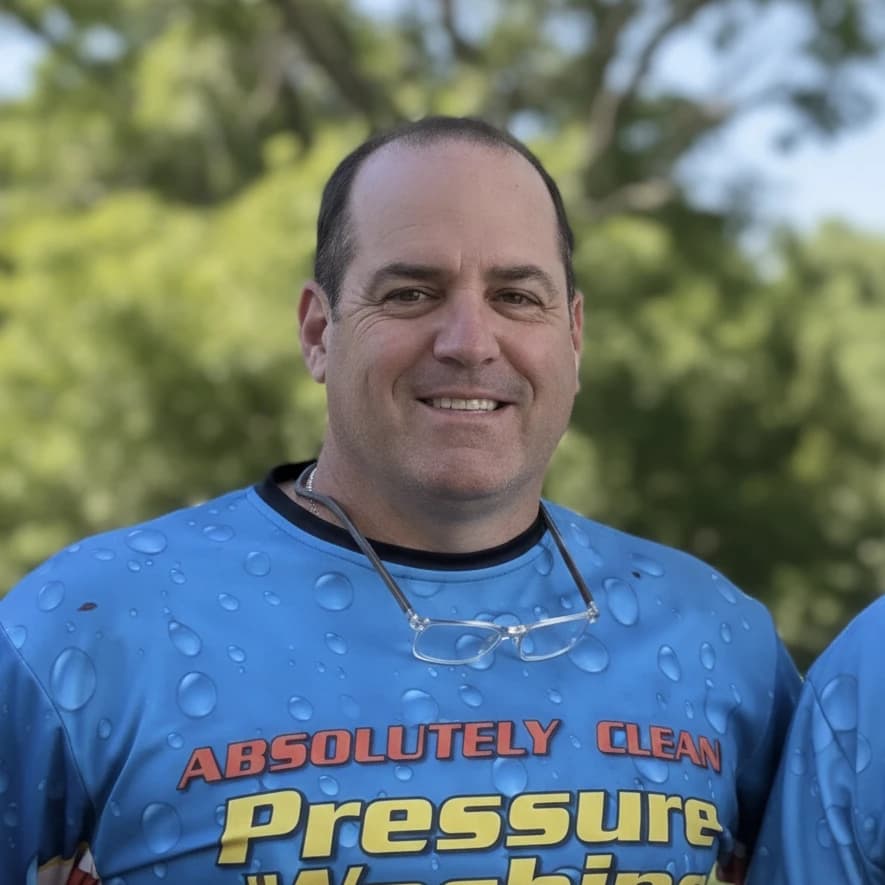
Stewart Esposito
When Should You Clean After Raleigh Pollen Season?
Use conditions—not a fixed calendar date—to choose the best window. NC State Extension describes North Carolina pine pollen as a spring event released over several weeks. A practical approach is to wait until the heaviest visible yellow accumulation has eased, then choose a mild weather window. Other plants can still be producing pollen, so one cleanup may not remove every later deposit.
If the coating is only light dust and the surface manufacturer allows it, a gentle water rinse may be enough during the active season. Save a more complete exterior clean for when repeated yellow buildup has slowed. Wind, rain, shade, nearby trees, and the surface itself matter more than a universal “best day.”
First Decide Whether It Is Pollen, Dirt, or Organic Growth
Loose yellow dust is different from staining that remains attached after rain or a gentle rinse. Black roof streaks, for example, may be algae rather than pollen. The Asphalt Roofing Manufacturers Association identifies Gloeocapsa magma as a common source of brown-to-black roof discoloration and warns against high-pressure washing on asphalt shingles.
Avoid diagnosing a roof from color alone or walking onto it for a closer look. ARMA recommends checking the shingle manufacturer’s instructions and notes that roof-cleaning work can become dangerously slippery. When the material or stain is uncertain, identify both before choosing pressure, chemistry, or dwell time.
Match the Cleaning Method to the Material
“Pressure washing” is not one setting. James Hardie’s published siding guidance recommends a low-pressure hose and a soft, nonmetal brush rather than a high-pressure power washer. Trex publishes product-specific deck care instructions and says pollen and debris can support mold growth, while its pressure-washer limits vary by product generation.
Before cleaning, find the manufacturer and product line when possible. Follow its current instructions, test a small inconspicuous area, and protect plants, outlets, open joints, painted coatings, and nearby furnishings. A method that is appropriate for concrete may be wrong for siding, composite decking, wood, or roofing.
| Area | Start with | Pause and get advice when |
|---|---|---|
| Siding and trim | A visual inspection and the material maker's care instructions | Paint is loose, seals are failing, or the material is unknown |
| Deck or patio | Remove loose debris and identify the exact surface material | Boards are soft, coated, damaged, or the product warranty limits cleaning methods |
| Roof | Inspect from the ground or use a qualified professional | Dark streaks, moss, loose shingles, or roof access would be required |
| Gutters and drains | Check for visible blockage and where rinse water will flow | Access is unsafe or wash water could enter a storm drain |
| Windows and screens | Use the window manufacturer's gentle-cleaning guidance | Screens, seals, or glazing show damage |
Plan Where the Rinse Water Will Go
The City of Raleigh warns that detergents and soaps entering storm drains can pollute waterways. Its professional guidance says to sweep pavement first, keep soaps and chemicals out of pavement pressure washing, and collect, filter, or redirect wash water away from a drain when needed.
That makes runoff planning part of the job, not an afterthought. Clear loose pollen and debris before wet work, use only a product approved for the surface, follow its label, and prevent contaminated runoff from reaching storm drains. Requirements can depend on the property and work being performed.
A Simple Triangle Homeowner Plan
- During heavy yellow buildup, remove loose deposits only when the material maker permits a gentle rinse.
- When accumulation slows, inspect siding, roof edges, gutters, decks, walks, windows, and screens from a safe location.
- Identify each material and follow its current care instructions; do not choose pressure by appearance alone.
- Separate loose pollen from persistent algae, mildew, oxidation, rust, or coating failure.
- Plan runoff and landscaping protection before introducing water or cleaner.
- Use a qualified professional for roof work, difficult access, uncertain materials, or persistent staining.
If you would like a property-specific recommendation, review our exterior cleaning services or request an estimate.
Sources & Methodology
This guide distinguishes source-backed material and runoff guidance from our practical scheduling recommendation. The timing advice is intentionally conditional because pollen intensity and property exposure vary from year to year and home to home.
- NC State Extension — Predicting the Start of the Pine Pollen Season — Explains that loblolly pine releases pollen over several weeks and that timing varies with heat accumulation.
- NC State Extension — Pollen Season Is Nothing to Sneeze At — Provides North Carolina context and cautions that highly visible pine pollen is not necessarily the main allergy trigger.
- James Hardie — Tips for Cleaning Your Siding — Recommends material-specific, low-pressure cleaning for James Hardie siding and trim.
- Trex — Care and Cleaning — Provides product-specific composite-deck guidance for pollen, debris, mold, and pressure washing.
- Asphalt Roofing Manufacturers Association — Algae Discoloration of Roofs — Explains black roof streaking, manufacturer consultation, fall hazards, and the warning against high-pressure roof washing.
- City of Raleigh — Detergents and Soaps — Details local practices for keeping detergents and wash water out of storm drains.
Source guidance may change. Check the linked publication and the care instructions for your specific material before cleaning.
Related Services

Stewart Esposito
Owner
Owner, Absolutely Clean Power WashingStewart has run Absolutely Clean Power Washing since 2012, serving properties across the Raleigh-Durham Triangle with experience in soft washing, pressure washing, and wood restoration.
Meet our team →Get Your Free Estimate
Find out exactly what your project will cost. No obligation, no pressure.
Get Free Quote →Related Articles
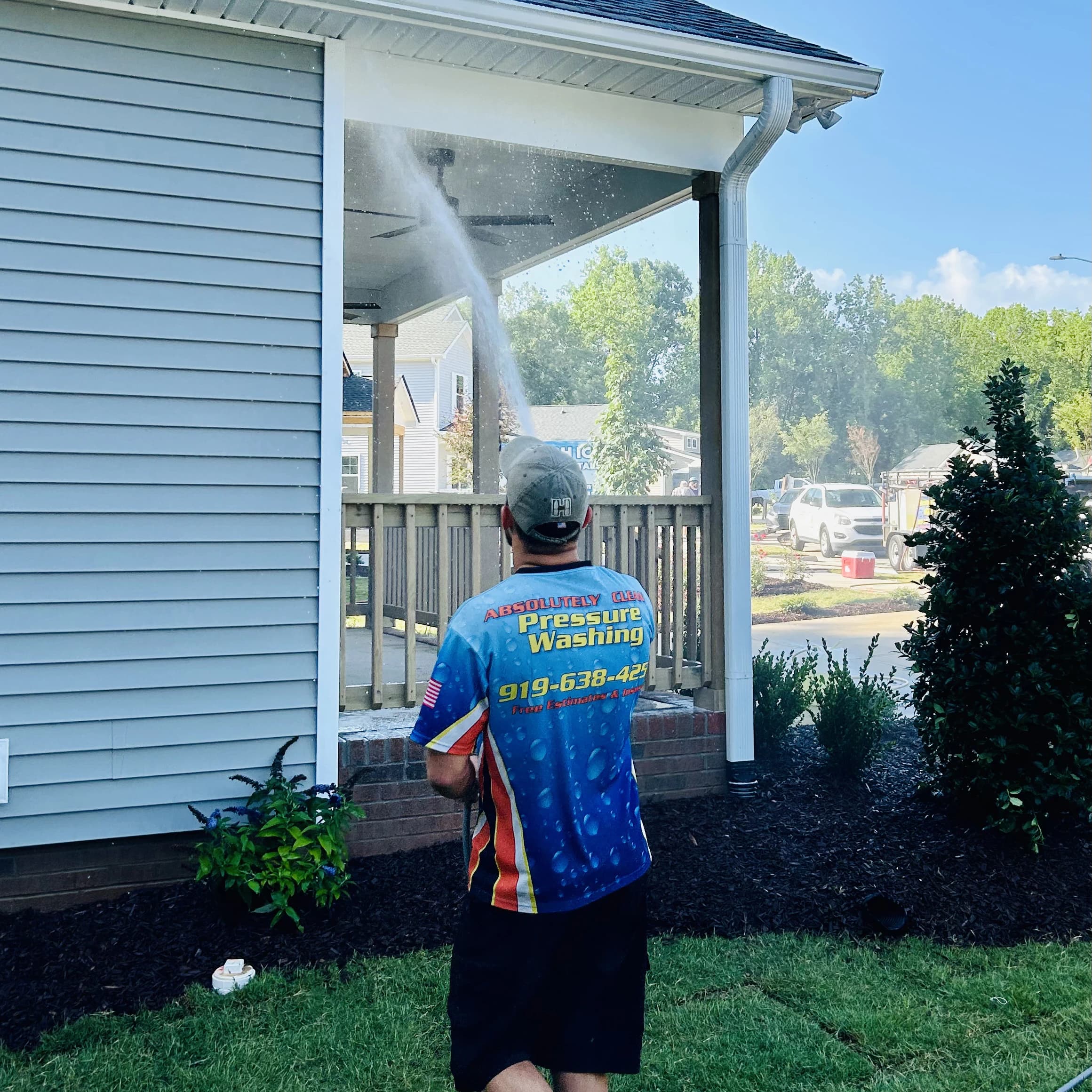
How Often Should You Clean a House Exterior in North Carolina?
Use surface condition, shade, drainage, nearby trees, and product-specific care instructions—not a universal interval—to plan exterior cleaning.

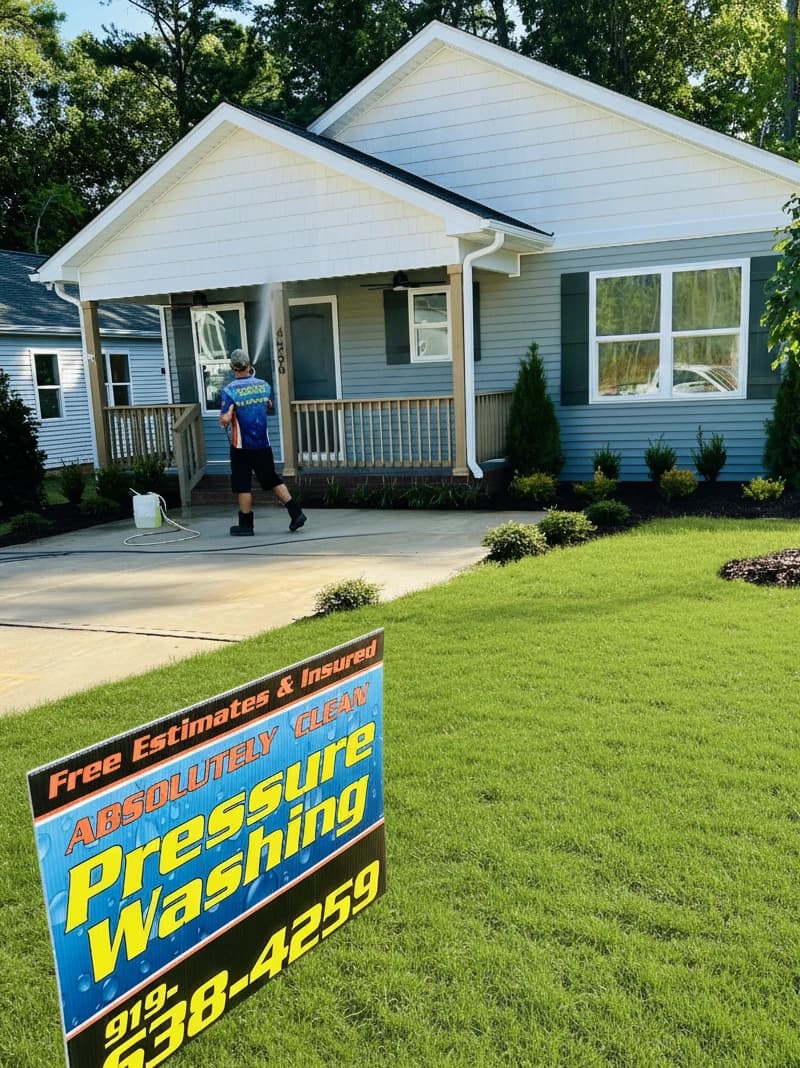
Soft Wash vs. Pressure Wash: Which Method Fits the Surface?
A surface-by-surface guide to selecting an exterior-cleaning method and checking the installed product’s care instructions before work begins.
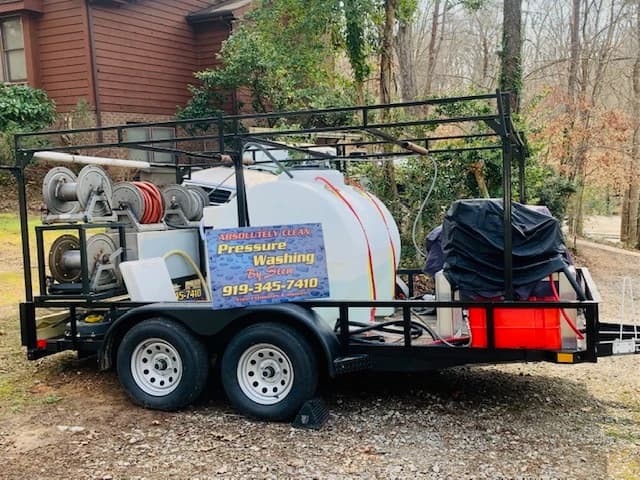
DIY vs. Professional Pressure Washing: A Practical Decision Guide
A practical framework for deciding what you can clean yourself and when the material, access, or runoff risk calls for trained help.